

Vacuum furnaces according to customer specifications


Vacuum Furnaces According to Customer Specifications: Development, Production, Technologies
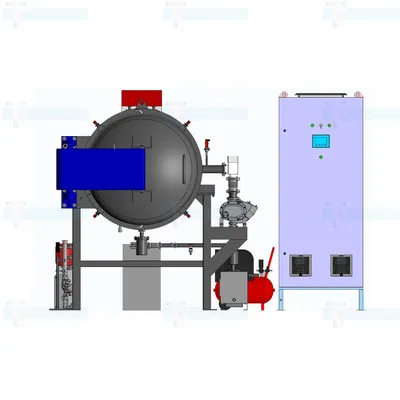
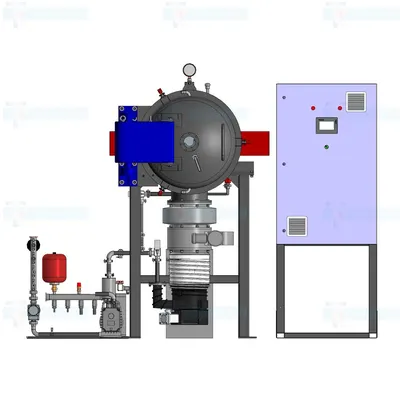
Vacuum furnaces are one of the most important tools in various industries such as aviation, energy, metallurgy, and medicine. They are designed for thermal treatment of materials under reduced pressure, which allows achieving high processing quality and improving product characteristics. This article covers the main aspects of development, production, and technology of vacuum furnaces created based on customer specifications.
Development of Vacuum Furnaces According to Specifications
Vacuum furnaces are created taking into account the specific needs of the customer.
Developing vacuum furnaces according to technical specifications requires highly qualified engineers and modern equipment. During the development process, thorough research of materials and properties must be conducted, as well as testing the furnace for compliance with specified parameters.
Technical Specification (TS)
The technical specification (TS) is a key document based on which the vacuum furnace project is developed. The TS specifies parameters such as:
- Maximum and minimum operating temperature;
- Dimensions and configuration of the working chamber;
- Requirements for the vacuum system;
- Type of heating elements and the materials they are made of;
- Requirements for the cooling system;
- Parameters for automation and process control.
All these parameters must be considered when developing vacuum furnaces according to technical specifications to obtain high-quality materials with the required properties.
Compliance with Environmental Safety Standards in Equipment Design and Production
When developing vacuum furnaces, several methods are used to ensure environmental safety and reduce the impact on the environment during equipment production and operation.
One such method is the use of materials with low content of harmful substances, such as lead, cadmium, mercury, and other toxic metals. Alternative materials that do not contain hazardous substances, such as ceramics, glass, and stainless steel, can also be used.
Another method is the use of energy-saving technologies, such as thermal insulation, which reduces energy consumption.
Filtration systems that reduce gas emissions.
When designing certain facilities, exhaust gas recirculation systems can be used, allowing part of the energy to be reused and reducing emissions into the atmosphere.
Additionally, an important method is the use of air purification systems that filter harmful emissions and reduce environmental impact. Such systems can be equipped with filters to capture toxic substances and purify the air.
Result
Based on the technical specification, designers develop detailed drawings and specifications, which are then used to manufacture the vacuum furnace.
Production of Vacuum Furnaces
The production of vacuum furnaces includes several stages:
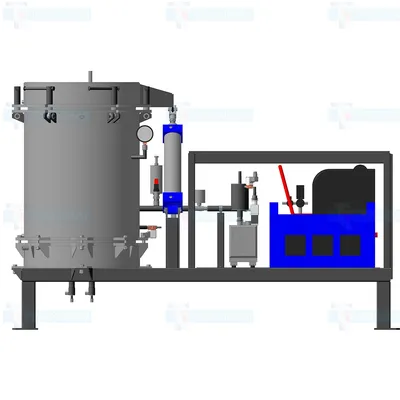
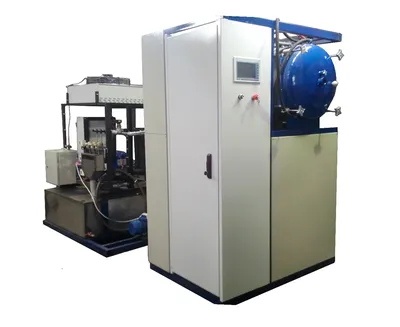
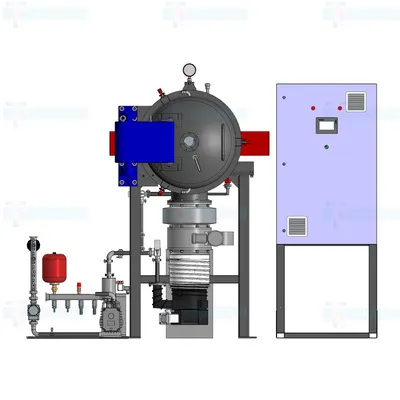
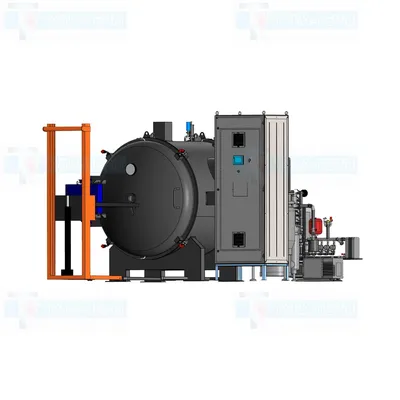
- Manufacturing the furnace body. The furnace body is made from high-quality materials that ensure tightness and durability of the structure. At this stage, flanges and other elements for securing the vacuum system and heating elements are also installed.
- Installation of the vacuum system. The vacuum system consists of a vacuum pump, valve system, gates, vacuum gauge, and other components that ensure the creation and maintenance of the required vacuum level in the furnace working chamber.
- Installation of heating elements. Depending on the TS requirements, heating elements can be made from various materials such as silicon carbide, molybdenum, or graphite. Heating elements are installed inside the furnace working chamber.
- Installation of the cooling system. Vacuum furnaces can be equipped with air or water cooling. The cooling system ensures temperature stability of the furnace body and prevents component overheating.
- Integration of automation and control system. Automated control systems allow monitoring and regulating thermal treatment process parameters such as temperature, time, and pressure. They also ensure the safety and reliability of furnace operation.
- Testing and debugging. After completing the assembly of the vacuum furnace, a series of tests are conducted to check tightness, performance characteristics of heating elements, and the vacuum system. If discrepancies with TS requirements are found, debugging and defect elimination are carried out.
Vacuum Furnace Technologies
Vacuum furnaces are used for various technological processes, including:
- Vacuum hardening. Hardening in a vacuum prevents surface oxidation of products and ensures uniform heating and cooling of parts.
- Vacuum deposition. This technology allows applying thin coatings to product surfaces, improving their characteristics such as wear resistance, heat dissipation, and electrical conductivity.
- Vacuum brazing. Vacuum brazing ensures high joint purity, eliminates oxidation, and prevents void formation in brazed seams.
- Vacuum sintering. Sintering under vacuum conditions allows obtaining compact materials with high density and improved mechanical properties.
The process of developing, producing, and applying vacuum furnace technologies based on customer specifications requires close cooperation between the customer and the manufacturer. This allows considering all requirements and process features, ensuring high quality and reliability of the resulting products.
Related Services
In addition to designing and manufacturing vacuum furnaces, we provide the following additional services:
- Commissioning and start-up at the customer's production site;
- Training customer personnel in the operation and maintenance of vacuum equipment;
- Repair and modernization of vacuum furnaces, including those from other manufacturers;
- Supply of spare parts and consumables;
- Technical support and service throughout the entire operational life;
- Development of technological processes for thermal treatment of materials in vacuum;
- Testing of customer product samples in our vacuum furnaces;
- Rental of vacuum furnaces for testing or mastering technological processes;
- Consultations on the development and operation of vacuum equipment and technologies.
Our comprehensive service package allows customers to optimize production processes, achieve consistently high product quality, and minimize costs for operating vacuum furnaces.
Conclusion
Our company has the competencies and a full technological base for designing vacuum furnaces for various technological processes:
- High-temperature vacuum furnaces for sintering ceramic and metal powders;
- Vacuum furnaces for drying and thermal treatment of products made from ceramics, glass, metals, and alloys;
- Vacuum furnaces for producing high-quality optical elements and lenses;
- General-purpose drying ovens;
- Special vacuum furnaces for physical testing and thermal treatment of materials under extreme conditions.
Years of experience, modern production equipment, and qualified personnel allow us to develop and manufacture highly efficient vacuum furnaces to solve the most complex technological tasks of our customers.
Contact our company, and our engineers will design a vacuum furnace according to your technical specification, taking into account all the features of your technological process:
- They will analyze the task and propose optimal design solutions;
- Develop working drawings and equipment specifications based on modern CAD systems;
- Select materials, components, and control systems in accordance with technology requirements;
- Simulate furnace operation and refine heating modes considering the specifics of the processed products;
- Perform strength calculations and select optimal thermal insulation for maximum energy efficiency;
- Provide author supervision over the manufacturing and installation of equipment, its commissioning, and adjustment;
- Ensure service and supply of spare parts throughout the entire service life of the vacuum furnace.
By contacting us, you will receive a high-tech vacuum furnace fully adapted to your production processes, guaranteeing maximum efficiency and product quality.

 8 (4872) 70-19-61
 info@tula-term.ru
 5 K. Marksa St., Tula, 300001

