

Salt electrode bath SVS 3.3.6/13


Salt Electrode Bath: Operating Principle and Benefits for Your Production
A salt electrode bath is a highly efficient industrial furnace for metal heat treatment, using molten salt as a heat transfer medium. The operating principle of the unit involves heating by passing an electric current directly through the salt melt itself. Due to the high electrical conductivity of salts, they themselves act as a heating element, ensuring rapid and uniform heating of the parts immersed in them.
Technology Application Areas
- Hardening: Heating steel parts to temperatures above the critical point (e.g., 800–950 °C) followed by rapid cooling.
- Tempering: Heating hardened parts (300–600 °C) to relieve internal stresses and impart the required set of mechanical properties.
- Nitrocarburizing: The melt acts as a source of active nitrogen and carbon atoms, which diffuse into the surface layer, significantly increasing its hardness and wear resistance.
- Brazing with hard solders: Ensures uniform heating of joints and reliable protection against oxidation.
Key Advantages for Your Business
- High heating speed: Heat is transferred from the melt to the part through direct contact, which is more efficient than heating in air furnaces.
- Uniformity: Local overheating is eliminated, as the part is surrounded on all sides by a medium with identical temperature.
- Oxidation protection: The molten salt completely isolates the metal from contact with air oxygen, preventing scale formation and decarburization.
- High precision: The technology allows precise temperature maintenance within the technological process.
Working media: The most common mixture is 75% BaCl₂ + 25% NaCl (working range ~750–950 °C). For high-temperature treatment, pure BaCl₂ (working range ~1050–1250 °C) can be used.
Want to know the exact price and how to purchase the unit? Leave a request, and our specialists will prepare a customized commercial proposal with a payback calculation specifically for your tasks.
More from Salt Bath Electrode Furnaces
View all in category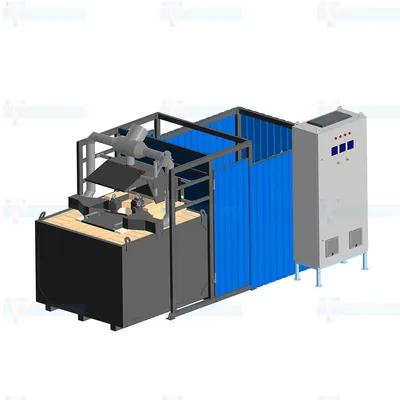

 8 (4872) 70-19-61
 info@tula-term.ru
 5 K. Marksa St., Tula, 300001

